
Why the New US Green Card Law Shatters the Hopes of Indian F-1 Visa Students
A policy memorandum from US Citizenship and Immigration Services has sent shockwaves through the international student community. The directive, issued on May 21, 2026, explicitly states that "Adjustment of Status" inside the United States will now be granted only under extraordinary circumstances.
- Republic Business
- 3 min read

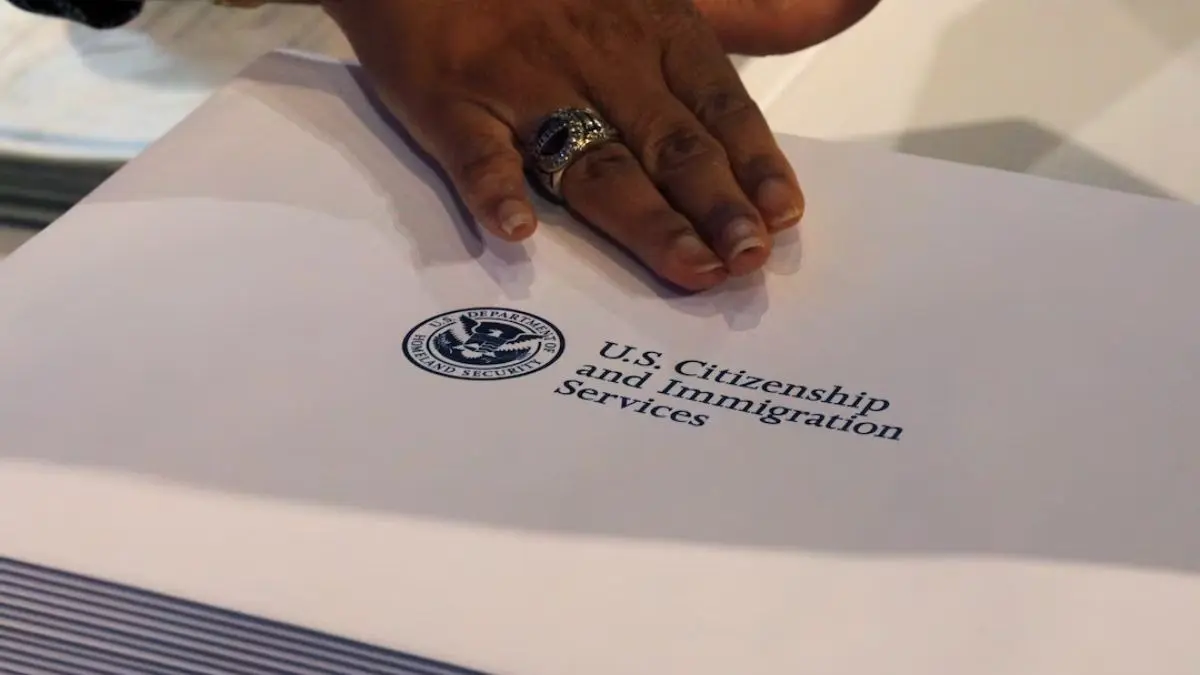
A sudden policy shift by the United States government has placed the future of over two hundred thousand Indian international students in jeopardy.
According to a fresh policy memorandum issued by US Citizenship and Immigration Services (USCIS), the agency will now grant "Adjustment of Status" inside the country only in extraordinary circumstances. The move effectively dismantles a routine, 50-year-old framework that allowed legal visa holders to complete their permanent residency process without leaving American soil.
USCIS Spokesman Zach Kahler confirmed the stance, stating that temporary stays in the US should not function as the first step in the Green Card process. The policy forces temporary visa holders to return to their home countries to complete immigrant visa processing via the Department of State.
F-1 Visa Holders
While corporate immigration lawyers note that dual-intent visas like the H-1B may retain some baseline legal arguments, the new policy hits F-1 student visa holders with full force.
Advertisement
An F-1 student visa is strictly a non-immigrant, single-intent visa. To secure it, an applicant must prove they have no intent to abandon their foreign residence. Under the newly tightened discretionary framework, filing for an in-country Green Card while on an F-1 visa can now be flagged by immigration officers as a violation of that original intent.
Previously, graduating students could transition to Optional Practical Training, secure corporate sponsorship, and wait out their paperwork. The new directive labels this domestic transition as an exception to the regular consular process rather than a standard one.
Advertisement
Risk of Rejection
The immediate fallout for Indian graduates will materialize at US consulates in New Delhi, Mumbai, Hyderabad, and Chennai. By forcing thousands of US-educated applicants to return to India for final interviews, the rule is expected to overwhelm an already burdened consular infrastructure. Long wait times for appointments are predicted to skyrocket.
Furthermore, applying for an immigrant visa from a home country introduces severe friction. If an applicant’s temporary status expires while they wait in India, or if the consulate delays processing, they face extended periods of unemployment and indefinite separation from their lives and assets back in the United States.
Financial Risk for Indian Families
The policy change comes amid the Department of Homeland Security's move to eliminate the long-standing "Duration of Status" framework, aiming to replace it with strict, fixed four-year limits on student stays.
This dual legal onslaught completely alters the financial calculus for middle-class Indian families. Sending a child to the US usually involves massive educational loans, which is justified by the prospect of gaining long-term global work experience.
With the domestic route to a Green Card blocked, corporate employers may become highly hesitant to sponsor international students. A significant talent migration toward alternative academic and professional hubs like Canada, the United Kingdom, and Western Europe, where immigration pathways remain predictable.